
Indian homes are becoming smarter in 2026, with technology quietly changing the way people manage everyday life. Homeowners are looking for gadgets that make daily tasks easier, improve security, and help save time and energy—all without spending a fortune. Whether it’s simplifying household chores, keeping an eye on the home, or making everyday routines more convenient, the right gadgets can make a noticeable difference. 🔌🏠
Not a list of shiny tech for its own sake — these are the ten gadgets that actually solve everyday problems in an Indian household: power cuts, hard water, dusty floors, and the general chaos of running a home.
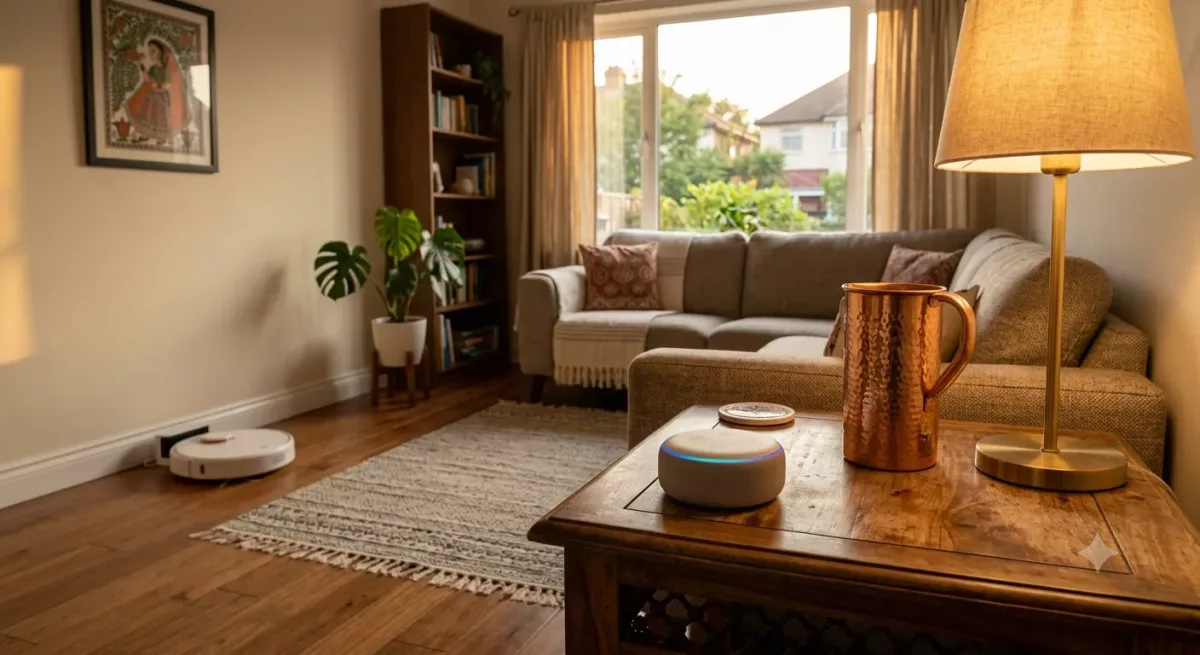
Every year, "best gadgets" lists get flooded with things nobody actually needs — gimmicky kitchen tools, novelty desk toys, gadgets that look great in a product photo and gather dust within a month. This list is different on purpose. Every gadget here earns its spot because it solves a problem that shows up in a real Indian home: unreliable power, hard or contaminated tap water, dusty floors that need daily attention, a domestic helper you want to trust but still keep an eye on, or a kitchen that could use a backup burner during a gas cylinder delay.
None of these require you to rebuild your house into a "smart home." Most work standalone, plug in normally, and pay for themselves within a year through convenience or saved electricity.
How we picked these: priority went to problems that are genuinely common in Indian households — power instability, water quality, dust, and security — over gadgets that only make sense in a fully automated Western-style smart home. If a category needed a specific brand recommendation, we named one; otherwise we tell you what specs actually matter so you can pick confidently across brands and price points.
Smart Wi-Fi Speaker
Best for: hands-free control, music, timers
This is usually where people start, and for good reason. A smart speaker sits in your kitchen or living room and responds to voice commands — set a timer while your hands are covered in atta, play music without touching your phone, or ask it to add something to your shopping list. Once you connect a few smart plugs or bulbs, it becomes the single point of control for all of them instead of juggling three different apps.
Stick to a well-known name here — the Amazon Echo Dot and Google Nest Mini both work reliably with Hindi and regional-accented English, which matters more in daily use than most spec sheets let on.
An easy, low-risk first purchase if you're curious about home automation at all.
Smart Wi-Fi Plug
Best for: geysers, lamps, fans, forgetful mornings
The single cheapest way to make an old appliance "smart." Plug your geyser, table lamp, or fan into one of these, connect it to the app, and you can turn it on or off from your phone — including from outside the house. This is genuinely useful for the classic Indian household worry of "did I switch off the geyser before leaving," and it also lets you set schedules, like a porch light that turns on automatically at dusk.
Check the ampere rating before buying one for a geyser or heater — a plug rated for 10A is fine for lamps and fans, but geysers and heaters need a 16A-rated smart plug or it can overheat.
Cheap, useful immediately, and doesn't require any other smart devices to be worth it.
Robot Vacuum Cleaner
Best for: hard floors, daily upkeep, pet hair
Indian homes collect dust fast, especially near windows and in cities with construction dust or pollution. A robot vacuum doesn't replace a proper mop-and-bucket clean, but it handles the daily maintenance — the fine dust and loose debris that builds up between deep cleans — without you lifting a finger.
Budget models (₹9,000–₹15,000) do basic suction and bump-and-turn navigation, which works fine for smaller apartments. If you have a larger home or multiple rooms, spend more for one with laser or camera-based mapping (LIDAR), since it cleans more efficiently and won't get stuck as often on thresholds and cables.
◐ Worth Considering
Worth it if you have mostly hard flooring and open layouts; less useful for homes with thick carpets, lots of floor clutter, or loose wiring it can get tangled in.
Wi-Fi Smart Security Camera
Best for: monitoring domestic help, elderly parents, package deliveries
A Wi-Fi camera in the living room or main entrance covers a lot of common Indian household needs at once: checking in on elderly parents during the day, keeping an eye on domestic help or a child at home, or just seeing who rang the doorbell while you were out. Most models now come with two-way audio, motion alerts, and local SD card storage so you're not forced into a monthly cloud subscription.
If privacy is a concern — and it's a fair one — look for a model with a physical privacy shutter or one that lets you fully disable the camera feed when you're home, rather than one that's always recording to the cloud.
Genuinely useful peace of mind, and inexpensive enough that most households can justify one or two units.
RO+UV+UF Water Purifier
Best for: hard water areas, boiling-water fatigue
Not a flashy gadget, but arguably the most important one on this list for most Indian households. Municipal water quality varies wildly by locality, and even "safe" tap water in many cities is hard enough to affect taste and appliance life over time. A combination RO+UV+UF purifier removes dissolved solids, kills bacteria and viruses, and filters out suspended particles — covering both borewell water and municipal supply.
If your TDS (total dissolved solids) is already low — common in some parts of the country with softer groundwater — a straight RO system will actually strip out useful minerals unnecessarily. It's worth testing your water's TDS level before buying (many purifier brands will do this for free) so you don't overpay for filtration you don't need.
One of the few gadgets on this list with a genuine, direct health impact.
Mini UPS for Wi-Fi Router
Best for: work-from-home during power cuts
Every smart gadget on this list depends on one thing staying alive during a power cut: your Wi-Fi router. Yet almost nobody backs it up. A small UPS (essentially a battery pack designed for routers and modems) keeps your internet running for 3–8 hours through a power cut, which matters a lot more than it sounds — especially if you work from home or rely on internet for calls during outages.
This is one of the least glamorous entries on this list, but it's also one of the highest value-for-money purchases here. Look for one rated for at least 12V/2A output that matches your router's power adapter specs.
Cheap, boring, and quietly one of the most useful things you can add to an Indian home.
Smart LED Bulbs
Best for: mood lighting, schedules, energy tracking
Smart bulbs screw into your existing fittings — no rewiring — and let you dim, change color temperature, or set schedules through an app or voice command. In practice, most people use two features: warm light for the evening (easier on the eyes than harsh white light) and a wake-up schedule that gradually brightens instead of a jarring switch-on.
Buy a starter pack of two or three for a living room or bedroom rather than replacing every bulb in the house — the cost adds up quickly, and most of the benefit is concentrated in the rooms you actually spend evenings in.
◐ Worth Considering
A nice-to-have rather than a necessity — genuinely pleasant once set up, but not urgent.
HEPA Air Purifier
Best for: metro cities, pollution season, allergy sufferers
If you live in a city where AQI regularly crosses "poor" during winter months, an air purifier stops being a luxury and starts being a health tool. Look at CADR (Clean Air Delivery Rate) rather than just wattage or "coverage area" claims — a higher CADR means it actually cycles the air in your room faster, which matters more in a country where outdoor AQI can spike suddenly.
Filter replacement cost is the hidden expense here — check how often the HEPA filter needs replacing and what it costs before buying, since a cheap purifier with expensive, frequent filter changes can cost more over two years than a pricier one with a longer filter life.
◐ Worth Considering
Near-essential in high-pollution cities during winter; less critical elsewhere.
Induction Cooktop
Best for: gas cylinder gaps, small kitchens, hostel/PG living
A genuinely practical backup, not just a gadget. When the cylinder runs out at an inconvenient time, or you're in a rented place without a piped gas connection, an induction cooktop gets you cooking again in seconds. It's also safer for households with small children or elderly members, since there's no open flame and most models auto-shutoff if a pan isn't detected.
The catch: you need induction-compatible cookware (flat-bottomed, magnetic steel or cast iron). If your entire kitchen is aluminium or non-magnetic steel, factor in the cost of at least one compatible pan.
Cheap enough to justify as a pure backup, even if you rarely use it day-to-day.
Instant Water Heater
Best for: winter mornings, rented homes without a geyser
A small, wall-mounted instant water heater is one of those gadgets that only becomes obvious in hindsight — cold-water bucket baths in winter are a genuinely common complaint in rented Indian homes that don't come with a fitted geyser. Instant heaters are compact, don't need a storage tank, and heat water in seconds rather than the 15–20 minutes a storage geyser needs.
They draw a fair amount of power (usually 3000W), so check that your bathroom's wiring and circuit breaker can handle the load before installing one — this is worth a quick call to an electrician if you're not sure, especially in older buildings.
An easy, affordable fix for a problem most renters have quietly tolerated for years.
How to Prioritize If You're Buying on a Budget
You don't need all ten at once. If you're starting from scratch, here's a sensible order based on cost-to-benefit:
Stage | Get this first | Why |
|---|---|---|
Under ₹2,000 total | Smart plug + mini UPS for router | Cheapest, most immediately useful, solve everyday annoyances |
₹5,000–₹10,000 | Water purifier or instant water heater | Directly improves daily quality of life and health |
₹10,000–₹20,000 | Robot vacuum or air purifier | Meaningful time or health savings, worth the spend once basics are covered |
Anytime, low cost | Smart speaker, smart bulbs, security camera | Nice quality-of-life additions once the essentials are sorted |
Frequently Asked Questions
Which gadget should I buy first for my home?
A smart plug or a mini UPS for your Wi-Fi router — both cost under ₹1,500 and solve everyday annoyances immediately, without needing you to commit to a full smart-home ecosystem.
Do smart home gadgets work during power cuts in India?
No, most Wi-Fi based smart devices stop working the moment power and internet go down, since they depend on your router staying online. A small UPS for your router is what actually keeps things running during a cut.
Is a robot vacuum worth it for Indian homes with a lot of dust?
Yes, for daily upkeep between full mopping sessions, but it won't replace a weekly deep clean. It's most useful in homes with hard floors and less useful on thick carpets or homes with a lot of loose wiring and clutter on the floor.
Do I need to buy all these gadgets from the same brand?
No. Most smart plugs, bulbs, and cameras work over standard Wi-Fi and their own apps, and increasingly support Google Assistant or Alexa regardless of brand. You only need to worry about brand-matching if you specifically want everything controlled through one single app.
The common thread across this list isn't "smart home" for its own sake — it's picking gadgets that solve problems Indian households actually deal with: unreliable power, water quality, dust, and the small daily frictions of running a home. Start with whichever problem bothers you the most, and build from there.