- The Reliability Benchmark: OnePlus Bullets Wireless Z3 in-Ear Neckband with 12.4mm Drivers, 3D Spatial Audio,10 mins Charge for 27 hrs Playback, 4 EQ preset, Dynamic bass Enhancement & BT5.4 — Best for commuters who prioritize call quality and stable connectivity in crowded areas.
- The Fitness Warrior: boAt Rockerz 255 Pro+, 60H Battery, Fast Charge, IPX7, Dual Pair,Low Latency,Magnetic Buds, App Support, in Ear Bluetooth Neckband, Wireless with Mic Earphones (Navy Blue) — Best for gym-goers and outdoor runners who need high-level moisture protection.
- The Office Multitasker: GOBOULT Newly Launched Tenet Pro with ANC TWS Earbuds, 75H Playtime, Amp App Support, 32dB ANC, Quad Mic ENC, Dual Device Pairing, 13mm Driver Ear Buds, Bluetooth 6.0 Wireless Earbuds (Forest White) — Best for professionals switching between laptop meetings and phone calls.
- The Gamer's Choice: Lava Probuds Wave 931 Wireless ANC Neckband (Silver Grey) | 30dB ANC | 13mm Drivers | 40H Playtime | Fast Charge | ENC Mic | Dual Device Connectivity — Best for mobile gamers needing low latency and noise isolation.
- The Emergency Backup: pTron Tangent Evolve w/ 50Hrs Playtime, HD Mic, Pristine Sound, 14mm Drivers, Bluetooth V5.3 w/Dual-Device Pairing Wireless Neckband, Magnetic Buds, Voice Assistant,Type-C Fast Charging & IPX4(Black) — Best for students on a very tight budget who need a functional device for basic audio.
Most neckband earphones marketed under 2000 rupees rely on inflated battery claims and buzzwords to hide fundamental hardware compromises. In a market saturated with options, the real problem isn't finding a device that plays music; it is finding one that won't fail after three months of sweat exposure or leave you shouting into a microphone during a commute.
Budget audio is a game of trade-offs. You are rarely choosing the 'best' device, but rather the one whose specific weaknesses align with your tolerance. If you prioritize call clarity, you will likely sacrifice gaming latency; if you prioritize rugged waterproofing, you may lose out on advanced noise cancellation features.
How to choose
Moisture Resistance vs. Audio Complexity
Higher IP ratings like IPX7 are vital if you sweat heavily or run in the rain. However, these sealed designs often house smaller drivers. If you prioritize deep bass, you will likely have to settle for lower moisture resistance ratings like IPX4 or IP55.
Dual-Device Pairing
If you work from a laptop and phone, dual-device pairing is non-negotiable. Opting for a model without this forces you to manually disconnect and reconnect, a process that is prone to pairing failures in budget chipsets.
Latency vs. Battery Longevity
Ultra-low latency modes for gaming consume significant power. If you choose a model optimized for 45ms response times, expect the real-world battery life to drop faster than models designed for pure music playback.
Neckband Feature Comparison
| Product | IP Rating | Battery Life | Dual Pairing |
|---|---|---|---|
| OnePlus Bullets Wireless Z3 | IP55 | 36 Hours | Not stated |
| boAt Rockerz 255 Pro+ | IPX7 | 60 Hours | Yes |
| GOBOULT Tenet Pro | Not stated | 75 Hours | Yes |
| Lava Probuds Wave 931 | Not stated | 40 Hours | Not stated |
| pTron Tangent Evolve | IPX4 | 50 Hours | Yes |
1. OnePlus Bullets Wireless Z3
The Reliability Benchmark: Best for commuters who need consistent call clarity.
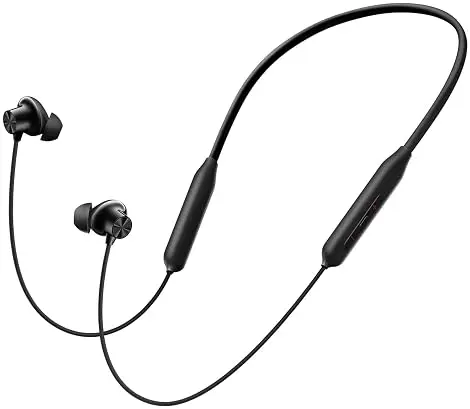
The OnePlus Bullets Wireless Z3 is the most dependable option for users who prioritize stable connectivity and voice quality during daily commutes. It earns its top spot by pairing modern Bluetooth 5.4 with AI-driven ENC, which actively suppresses wind and high-frequency noise during calls. The 10-minute charge providing 27 hours of playback makes it highly practical for those who frequently forget to charge their devices.
The primary drawback is the cost, as it sits at the top of the budget range. Additionally, the 3D spatial audio features are software-dependent, meaning your experience may vary significantly depending on the device you connect it to. The listing does not explicitly confirm dual-device pairing, so if you frequently switch between a work laptop and a phone, this may not be your most efficient choice.
Pros: AI-enhanced ENC significantly improves voice clarity in noisy outdoor environments. Bluetooth 5.4 ensures a stable, reliable connection in crowded public spaces. IP55 rating provides necessary protection against sweat and light rain. Rapid charging allows for 27 hours of playback from just 10 minutes of charging.
Cons: Higher cost compared to other neckbands in this category. Spatial audio performance is limited by the software of the connected device. Absence of specified dual-device pairing functionality.
Best for: Commuters who need clear call quality in noisy environments.
Skip it if: Users on a strict budget under 1000 INR or those who require seamless dual-device pairing.
2. boAt Rockerz 255 Pro+
The Fitness Warrior: Best for gym-goers and outdoor runners.
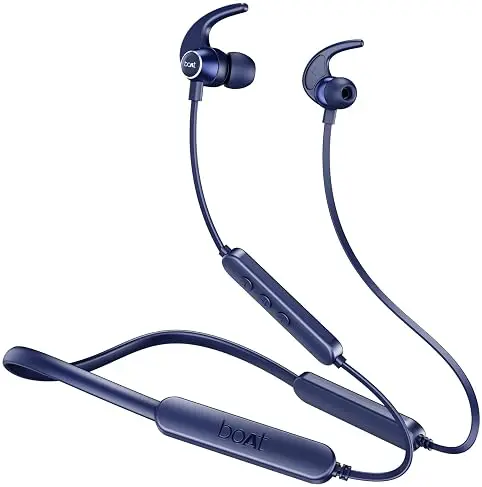
If you are looking for a device that can survive heavy perspiration and outdoor exposure, the boAt Rockerz 255 Pro+ is the most resilient choice. Its IPX7 rating is the highest in this group, offering superior moisture resistance compared to standard IPX4 or IPX5 models. With 60 hours of battery life, it is designed for users who want to go days without reaching for a charging cable.
The trade-off for this ruggedness is the audio hardware; it utilizes 10mm drivers, which are smaller than the 13mm or 14mm drivers found in competing models. It also lacks active noise cancellation, so it will not be effective at isolating sound in a busy office or loud transit environment.
Pros: IPX7 rating offers the best protection against water and sweat in this category. Dual pairing allows you to switch between two devices simultaneously. Massive 60-hour battery life reduces the frequency of required charging. ASAP charge provides 20 hours of playback from a quick 10-minute charge.
Cons: Smaller 10mm drivers may not deliver the same bass depth as larger alternatives. Lacks active noise cancellation for blocking out ambient office noise. Long-term durability of the neckband frame remains unverified.
Best for: Gym-goers and runners who need high-level moisture resistance.
Skip it if: Users who need active noise cancellation for office or study environments.
3. GOBOULT Tenet Pro
The Office Multitasker: Best for professionals managing multiple devices.
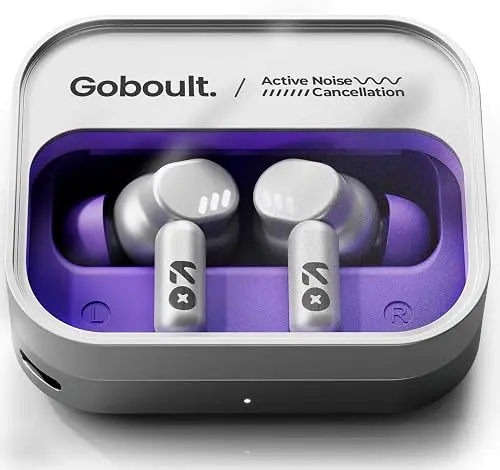
The GOBOULT Tenet Pro is tailored for the office environment where switching between a laptop for meetings and a phone for calls is a daily routine. Its standout feature is the dual-device pairing support, complemented by a dedicated app for EQ customization. The quad-mic ENC system is specifically designed to maintain voice clarity during video conferences.
Because this is a TWS-style hybrid rather than a traditional neckband, the fit may feel different for those used to the classic cable-behind-the-neck design. The claim of 75 hours of battery life is quite high for this segment, and prospective buyers should note that such figures are often derived from lab conditions rather than real-world usage.
Pros: Dual-device pairing is essential for seamless switching between laptop and phone. Dedicated app support allows for personalized EQ settings. Quad-mic ENC provides clear audio for professional meetings. 32dB ANC helps minimize background distractions in office settings.
Cons: TWS earbud form factor may be less secure during vigorous physical activity. Increased software complexity from app support may lead to occasional bugs. Unverified battery life claims compared to standard industry expectations.
Best for: Professionals who need to manage calls across multiple devices.
Skip it if: Users who prefer the secure fit and minimalist feel of a traditional neckband.
4. Lava Probuds Wave 931
The Gamer's Choice: Best for mobile gamers focused on latency.
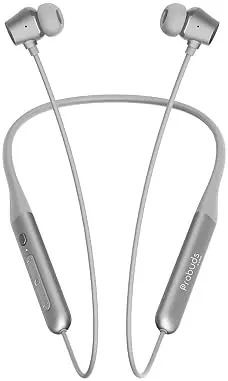
The Lava Probuds Wave 931 is the most focused option for mobile gaming, thanks to its 45ms low-latency mode. This feature is critical for competitive mobile games like BGMI or COD Mobile, where audio synchronization is a competitive necessity. The inclusion of 30dB ANC also provides a decent level of immersion by blocking out consistent, low-frequency background noise.
The primary limitation is the 40-hour battery life, which, while sufficient for most, falls short of the higher-capacity models in this list. There is also no explicit mention of dual-device connectivity, which may frustrate users who want to use the same headset for both gaming and work calls.
Pros: 45ms low-latency mode is ideal for lag-free gaming and video playback. 30dB ANC provides effective noise isolation for a more immersive experience. Magnetic hall switch allows for convenient auto-play and pause functionality. 13mm drivers deliver a balanced sound profile suitable for various media.
Cons: Shorter 40-hour battery life compared to other options. No documented support for dual-device connectivity. Microphone performance during intense gaming sessions remains unverified.
Best for: Mobile gamers who need low-latency audio for competitive play.
Skip it if: Users who prioritize long battery life over gaming-specific latency features.
5. pTron Tangent Evolve
The Emergency Backup: Best for students on a very tight budget.
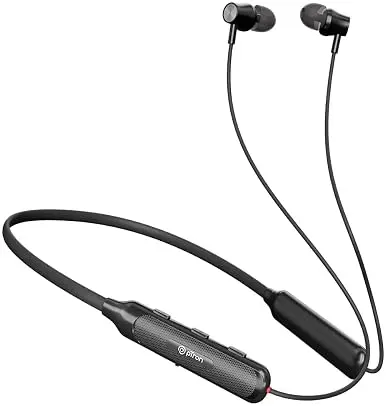
The pTron Tangent Evolve is a functional, low-cost solution for those who need a basic audio device without the premium price tag. It covers the essentials by including Type-C fast charging, dual-device pairing, and an IPX4 rating for light splash resistance. It is a suitable 'beater' device for students or casual listeners who need something to get the job done.
The trade-off for the low price is a shorter 6-month warranty, which suggests a different expectation for product longevity. Additionally, while the microphone is rated as 'HD', it lacks the advanced noise cancellation found in more expensive models, making it less reliable for use in noisy, outdoor, or windy environments.
Pros: Highly affordable price point makes it accessible for budget-conscious buyers. Dual-device pairing is a rare feature at this price level. Type-C fast charging ensures modern compatibility. IPX4 rating protects against splashes and light sweat.
Cons: Short 6-month warranty period indicates a shorter expected lifespan. Microphone quality is likely insufficient for noisy or professional settings. Basic build quality may not withstand heavy, long-term daily use.
Best for: Students or budget-conscious users needing a reliable backup device.
Skip it if: Power users who require high-quality microphones for professional or outdoor calls.
Mistakes to avoid
Ignoring the warranty duration
Budget brands often use shorter warranty periods (like 6 months) for their cheapest models. A device that fails in 7 months is effectively disposable.
Chasing the highest battery claim
Claimed playback hours are rarely achieved at high volumes. A 75-hour claim on a budget device often masks poor power efficiency or inaccurate testing standards.
Before you buy
Always check the listing for the specific 'fast charging' ratio. A claim of '10 minutes for 20 hours' is significantly more useful for a daily commuter than a generic 'fast charge' label without a time-to-playback metric.
If you live in a region with high humidity, inspect the material of the neckband in user photos. Soft-touch rubber coatings often degrade into a sticky, irritating mess after six months of exposure to sweat and heat.
Frequently Asked Questions
Which neckband has the least latency for gaming?
The Lava Probuds Wave 931 explicitly lists a 45ms low-latency mode, which is designed specifically for gaming requirements.
Can I connect to two devices simultaneously?
Models like the boAt Rockerz 255 Pro+, GOBOULT Tenet Pro, and pTron Tangent Evolve explicitly support dual-device pairing.
Will the neckband stay in my ears during a workout?
Look for models with ergonomic designs and varied silicone tip sizes. The pTron Tangent Evolve specifically highlights S/M/L silicone tips to accommodate different ear canal sizes.
Is the warranty claim process easy for these brands?
Warranty experiences vary by location. Brands like GOBOULT provide direct contact channels for support, but always verify the nearest service center density in your specific city before purchasing.
The verdict
For the majority of users, the OnePlus Bullets Wireless Z3 stands out as the most reliable daily driver due to its focus on call clarity and modern Bluetooth 5.4 connectivity. It balances the essential needs of a commuter without relying on gimmicky features.
If your primary use case is intense physical activity, skip the OnePlus model and choose the boAt Rockerz 255 Pro+ for its superior IPX7 protection. Those on a strictly limited budget should only look at the pTron Tangent Evolve as a temporary, low-cost solution.
How we researched this guide
These picks come from desk research, not hands-on testing. We compare published specifications against others in the same price band, read through verified buyer reviews for problems that repeat rather than one-off complaints, and check the current Amazon.in price to judge value. Products are scored on the same three factors every time — specifications (40%), buyer sentiment (40%) and value for money (20%).
We have not physically tested these products, and we say so rather than implying otherwise. Where a claim about safety, certification, battery behaviour or warranty appears in this guide, it comes from the manufacturer’s own documentation or the retailer’s listing — we do not verify manufacturer claims independently. Read the full methodology or tell us about a mistake via our corrections policy.