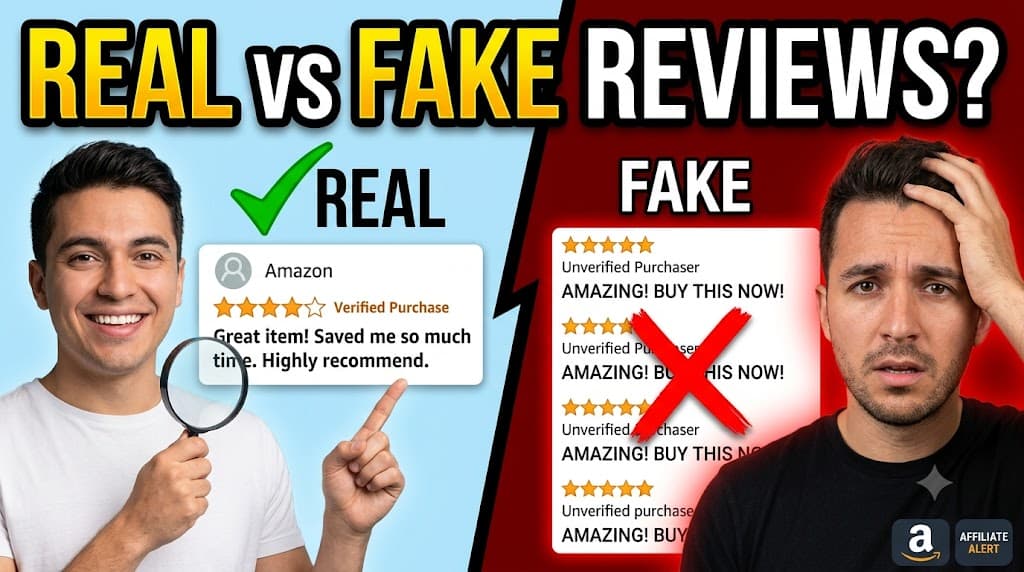
We’ve all been there. You’re looking for a new pair of headphones, a kitchen gadget, or a skincare product on Amazon. You find an option with a 4.8-star rating and 10,000+ glowing reviews. It feels like a no-brainer click, right?
But then you order it, open the box, and realize the product is complete junk.
This brings us to a massive dilemma facing online shoppers today: Are Amazon reviews actually trustworthy?
As an Amazon affiliate, my goal is to help you spend your money wisely. In this comprehensive guide, we are pulling back the curtain on the world of online ratings. You’ll learn why fake reviews exist, how to spot them like a pro, and the best tools to protect your wallet.
The Reality: Why Fake Amazon Reviews Exist
Amazon is a hyper-competitive marketplace. For third-party sellers, ranking on the first page of search results is the difference between making millions of dollars or going bankrupt.
Because Amazon’s A9 algorithm heavily favors products with high sales volume and positive feedback, some sellers take shortcuts. Instead of earning reviews organically, they manipulate the system through various black-hat tactics:
Review Farms: Companies that pay networks of real users to buy products, leave 5-star reviews, and get reimbursed via PayPal.
Brushing Scams: Sellers ship cheap, unsolicited items to random people's homes just so they can log into a fake account and write a "Verified Purchase" review.
Listing Hijacking / Review Merging: A seller takes an old, highly-rated listing for a completely different product (like an iPhone cable) and changes the images and text to a new product (like a face cream) to inherit those 5-star reviews.
While Amazon actively sues review brokers and uses AI to delete millions of fake reviews every year, thousands still slip through the cracks.
5 Red Flags: How to Identify Fake Reviews in Seconds
You don’t need to be a tech genius to spot a fraudulent review. The next time you are shopping, look out for these five major red flags:
1. The "Review Review Flood" (Check the Dates)
If a product goes from having zero reviews to hundreds of 5-star ratings over the span of just a few days, be highly suspicious. Real reviews accumulate slowly over weeks, months, or years. A sudden spike usually points to a coordinated review campaign.
2. Lack of "Verified Purchase" Badges
An Amazon review marked "Verified Purchase" means the account actually bought the item through the platform. If a product’s top reviews are overwhelming 5-stars but lack this badge, it means anyone could have written them without ever touching the product.
3. Repetitive Language and "Keyword Stuffing"
Paid reviewers often copy and paste templates or follow strict instructions from the seller to include specific keywords. Look out for:
Overly robotic or unnatural language.
Repetition of the exact, full product title (e.g., "This Bluetooth Headphones Wireless Earbuds Waterproof Charging Case is amazing!").
Vague phrases like "Works great, loved it!" repeated by dozens of different accounts.
4. Extreme Polarization (The "U-Shape" Curve)
Take a look at the breakdown of star ratings. A natural product distribution usually looks like a bell curve (mostly 4 and 5 stars, some 3 stars, and a few 1 or 2 stars). If the rating chart looks like a "U"—meaning it has tons of 5-star reviews and tons of 1-star reviews, but almost nothing in the middle—it usually means the 5-star reviews are fake, and the 1-star reviews are from actual, angry customers.
5. Click on the Reviewer’s Profile
If you suspect a review is fake, click on the reviewer's profile name. Are they reviewing 10 different products every single day? Do they give every single item a glowing 5-star rating? Real people leave a mix of good, bad, and mediocre reviews over a realistic timeline.
The Best Free Tools to Analyze Amazon Reviews
If you want to save time and automate your detective work, there are two incredible, free browser extensions and websites built specifically to grade Amazon listings:
Fakespot
Fakespot uses an AI algorithm to analyze the review data on any Amazon page. It looks at user review patterns, purchase history, and language to give the product a letter grade from A to F.
An A or B grade means the reviews are highly reliable.
A D or F grade means a massive percentage of the reviews are likely altered or fake. Fakespot will even give you an "Adjusted Rating" showing what the product actually scores based only on legitimate reviews.
ReviewMeta
Similar to Fakespot, ReviewMeta is a dedicated Amazon review checker. It filters out suspicious data, unverified purchases, and phrase repetition to give you a "Cleaned" or "True" rating. It’s highly visual and breaks down exactly why it flagged certain reviews as unnatural.
The Bottom Line: Can You Trust Amazon Reviews?
Yes, but with caution. You shouldn't completely ignore Amazon reviews—they are still an incredibly helpful resource for gauging product quality. However, you should never take a 5-star rating at face value.
Your Safest Shopping Checklist:
Read the 3-star and 4-star reviews: These are usually the most honest, balanced critiques from real buyers who will list both the pros and the cons.
Filter by "Most Recent": This helps you see how the product is performing right now, rather than relying on old reviews that the seller may have manipulated.
Run it through Fakespot or ReviewMeta: Take 10 seconds to analyze the link before you hit "Add to Cart."
By keeping a skeptical eye and using the right tools, you can easily outsmart dishonest sellers and ensure you only buy products that actually live up to the hype.
Frequently Asked Questions (FAQs)
Is it illegal for sellers to buy fake reviews?
Yes. Buying or incentivizing reviews strictly violates Amazon’s Terms of Service. Furthermore, regulatory bodies like the Federal Trade Commission (FTC) heavily crack down on these practices, issuing massive fines to companies caught using "review hijacking" or fake rating manipulation. Amazon also regularly takes legal action, suing review brokers and shutting down fraudulent seller accounts.
What happened to Fakespot? What can I use instead?
Fakespot was the internet’s most popular review checker for years, but it has been officially discontinued. Fortunately, you can still use ReviewMeta to clean up suspicious product scores. If you want an automated solution, newer browser extensions like Knockoff are great for scanning product pages and automatically hiding low-quality imports or unbranded listings using "linguistic signatures".
Can I trust Amazon’s "AI-Generated Review Summaries"?
Yes, but use them as a starting point, not the final word. Amazon uses generative AI to condense thousands of customer reviews into a short paragraph highlighting common pros and cons. While it saves time, the AI is only as good as the data it reads. If a product has been hit with a highly sophisticated wave of fake reviews, the AI can sometimes summarize those false claims as facts.
Are Amazon Vine reviews trustworthy?
Generally, yes. The Amazon Vine program invites vetted, honest reviewers to receive free products in exchange for completely unbiased feedback. Because these reviewers are not paid, do not interact with the sellers, and are encouraged by Amazon to be honest, you will frequently see detailed, highly critical 2-star or 3-star reviews from Vine Voices. They are much safer to trust than standard unverified reviews.
Does a "Verified Purchase" badge guarantee a review is real?
Not necessarily. While a "Verified Purchase" means the account actually bought the item on Amazon, bad actors have found workarounds. Some sellers use "brushing scams" (sending items to random addresses to generate a verified link) or coordinate through off-platform groups to refund buyers via PayPal after they leave a 5-star review.
How do I report a fake review if I see one?
If you spot a review that is clearly copy-pasted, mentions the wrong product, or offers a cash reward for a rating, click the "Report" button located directly beneath the review text. This flags the post for Amazon’s fraud and abuse prevention team to investigate manually.